
Can AI-Generated Essays Be Detected? How Universities Identify AI Writing

In this article:
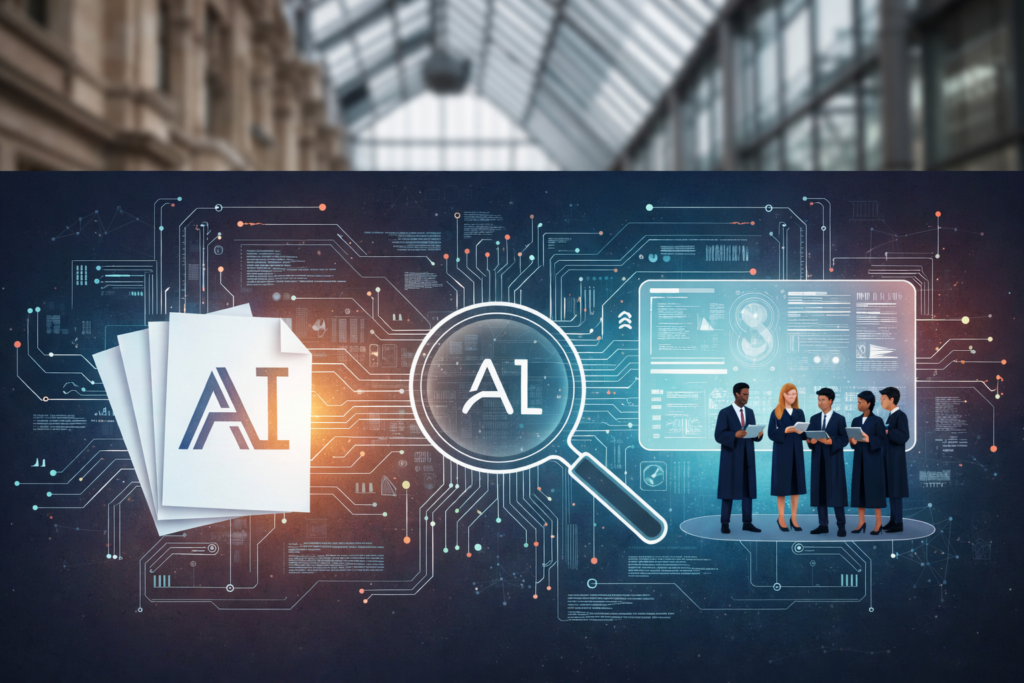
Can AI-generated essays be detected? This is no longer an open question in higher education. In 2023–2025, universities shifted from experimentation to enforcement. Detection now relies on linguistic analysis, writing consistency, and academic evaluation rather than surface plagiarism alone. As generative systems improve, AI writing detection has become part of routine academic review, not an exception.
This shift is driven by scale. Surveys across the UK, EU, and US show that 70–90% of students report using generative AI tools for academic tasks at least once. At the same time, institutions are under pressure to protect grading fairness, degree credibility, and academic standards. This is why AI generated essays detection is no longer optional.
Why Universities Are Actively Detecting AI-Written Essays
The growth of AI writing tools has been exponential. Between 2022 and 2024, student use of generative AI in coursework more than doubled in most OECD countries. Free access and low learning curves removed technical barriers almost entirely. Universities respond for three measurable reasons.
- Academic integrity. Degrees are awarded based on individual learning outcomes. If assignments no longer reflect student effort, evaluation loses meaning.
- Assessment reliability. Institutions must ensure that grades reflect comparable effort across cohorts. Unequal access to AI tools undermines this balance.
- External accountability. Accreditation bodies increasingly ask universities to document how they preserve academic standards in the presence of generative AI.
Because of this pressure, AI writing detection has moved from pilot testing to operational use. Detection does not assume misconduct by default. It flags risk indicators for further academic evaluation.
How AI Detection Tools Work
AI detection tools do not search for copied text. They analyze how language behaves. Universities assess statistical writing patterns, predictability, and structural consistency to determine whether a text aligns with human academic writing or automated generation.
Writing Patterns and Predictability
AI-generated text shows measurable regularities. Sentence length is evenly distributed. Vocabulary repetition is statistically stable. The argument flow is smooth but generic.

Time is precious
don’t waste it!
Get instant essay
writing help!


Plagiarism-free guarantee

Privacy guarantee

Secure checkout

Money back guarantee
Human writing does not behave this way. It includes uneven pacing, emphasis shifts, and stylistic variation linked to intent. AI generated essays detection systems compare these signals against large datasets of human academic writing.
Perplexity and Burstiness Explained Simply
Perplexity measures how expected each word is in context. Lower perplexity indicates machine-generated text. Burstiness measures variation in sentence structure and rhythm.
Human writing typically shows higher burstiness and less predictability. AI writing tends to cluster around average values. These metrics are central to AI writing detection, especially when combined with contextual review.
Popular AI Detection Tools Used by Universities
Most universities do not rely on a single system. Detection is layered.
One widely adopted solution is Turnitin AI detection, integrated into existing plagiarism workflows. It evaluates linguistic predictability alongside originality reports.
Institutions may also use standalone checkers or internal linguistic models to cross-check results. Some departments apply manual review for high-risk submissions.
Importantly, no detector is perfect. False positives occur. This is why AI writing detection outcomes are reviewed together with:
- Prior student writing samples
- Assignment complexity
- Citation accuracy
- Source credibility
Detection supports academic judgment. It does not replace it.
Common Signs That Trigger AI Writing Suspicion
Suspicion usually arises from a pattern mismatch rather than a single feature. Common indicators that may prompt additional academic review include:
- Arguments that remain general and do not clearly articulate or defend a position
- Examples that lack subject-specific context or recognised academic grounding
- Writing complexity that does not align with a student’s previous submissions or demonstrated level
- References that cannot be verified through standard academic databases
- Noticeable and unexplained shifts in writing style, tone, or fluency
These signals affect credibility and originality. When combined, they often lead to detect AI writing review rather than immediate penalties.
Why Making AI Essays Undetectable Doesn’t Work?
Many students attempt to bypass systems through rewriting or paraphrasing. The data shows this is unreliable. “Humanizing” AI text often changes surface wording while preserving structure. Paraphrasing does not equal originality. Argument logic, citation gaps, and predictability patterns remain.
Detection systems evolve faster than avoidance tactics. Between 2023 and 2025, universities reported multiple updates to AI content detection models, specifically targeting paraphrased AI output.
Academic Consequences of Submitting AI-Written Essays
Universities usually do not look at AI misuse as a technical mistake. They see it as an academic responsibility issue. The goal is not to catch students out but to make sure assessment remains fair, transparent, and comparable for everyone.
When questions arise, the response is often gradual. In some cases, students may be asked to explain how the work was produced or to revise parts of an assignment. Other situations may involve grade adjustments or a formal review under existing academic integrity rules. Sometimes, institutions also offer guidance or short training on responsible academic practice.
The impact can extend beyond a single paper. Academic records, progression decisions, or eligibility for certain programs may be reviewed, depending on university policy. These steps are meant to protect the value of academic outcomes and maintain trust in the evaluation process, not to punish students unnecessarily. This is why the question. “Can AI generated essays be detected?” remains relevant. No method guarantees safety, especially under academic review.
Safer Alternatives to Submitting AI-Generated Content
AI can still be part of academic work when it is used with care and clear limits. Many students rely on digital tools to organize their thoughts, manage time, or better understand complex material. In this context, AI is closer to a study aid than a replacement for learning.
Lower-risk uses usually sit at the preparation stage. This includes exploring possible topics, sketching a rough structure, clarifying unfamiliar concepts, or improving language clarity when disclosure is allowed. Used this way, AI supports the process without taking ownership of the work.
Problems tend to appear at the submission stage. Universities expect final papers to reflect a student’s own reasoning, sources, and decisions. When the final text is authored by the student, originality is easier to demonstrate, academic intent is clearer, and compliance with AI plagiarism detection systems becomes far less risky.
This approach protects both academic standing and trust in the evaluation process while still allowing students to benefit from modern tools in a responsible way.
Final Thoughts – Is AI Writing Worth the Risk?
AI tools increase speed, not responsibility. Universities assess accountability, evidence, and originality. Detection exists because institutions must protect fairness and degree value. For graded work, the risk often outweighs convenience. Understanding AI writing detection mechanisms allows students to make informed, ethical decisions rather than reactive ones.
If you are unsure how to use digital tools without crossing academic boundaries, focus on transparency, original reasoning, and verified sources. Responsible choices protect your grades, your academic record, and the long-term value of your education.
FAQ
Can universities detect AI-generated essays?
Yes. Many universities can identify AI-generated writing by analyzing language predictability, structure, and consistency with a student’s previous work. Detection is usually combined with an academic review rather than based on automated results alone.
What tools do universities use to detect AI writing?
Institutions use a mix of plagiarism systems with AI analysis features, standalone linguistic detectors, and internal review methods. These tools assess writing patterns, citation behavior, and coherence rather than searching for copied text only. Universities rely on academic AI detection to evaluate writing patterns, originality, and consistency with academic standards across student submissions.
Are AI detectors 100% accurate?
No. AI detectors provide probability-based assessments, not definitive proof. Results can include false positives or negatives, which is why universities typically review flagged work alongside contextual evidence and academic history.
Can paraphrasing AI text avoid detection?
Paraphrasing does not guarantee safety. While wording may change, structural patterns, argument flow, and statistical language features often remain detectable through advanced review methods.
What happens if a student is caught submitting AI-written work?
Consequences depend on institutional policy and severity. They may include grade reduction, assignment failure, formal academic misconduct records, or required integrity training. Universities emphasize AI academic integrity to ensure assessments reflect genuine learning, verified sources, and individual responsibility rather than automated text generation.
Is it safe to use AI at all for academic work?
Yes, when used responsibly. AI is generally acceptable for brainstorming, outlining, or clarifying concepts, provided final submissions reflect the student’s own work and comply with university guidelines.
Time is precious
don’t waste it!
Get instant essay
writing help!
Plagiarism-free guarantee
Privacy guarantee
Secure checkout
Money back guarantee
You might also like



With us, you will submit your paper on time
